Thailand Politics & Constitutional Reform in 2026: What It Means for Real Estate Investment
Thailand’s political landscape is once again entering a period of transformation following the 2026 constitutional referendum and ongoing coalition negotiations. While politics and real estate may appear separate at first glance, experienced investors understand that political direction often shapes investor confidence, economic policy, foreign ownership sentiment, and long-term market stability.
For both domestic and international buyers, one important question is now emerging:
How could Thailand’s constitutional reform and political changes impact real estate investment?
The answer is both complex and highly important for anyone considering property investment in Phuket, Bangkok, Pattaya, Koh Samui, or other key markets.
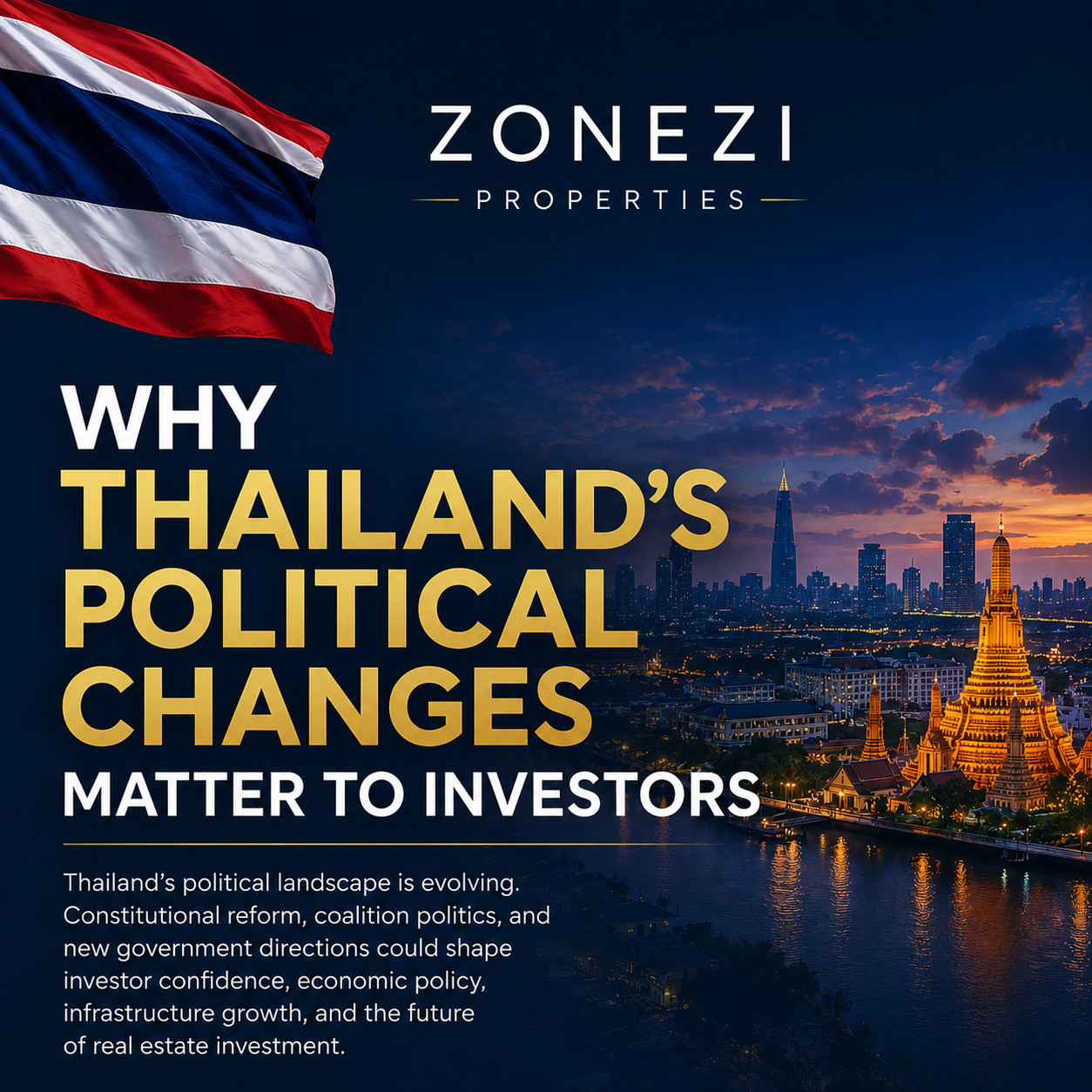
Why Thailand’s Political Changes Matter to Investors
Thailand has historically remained one of Southeast Asia’s strongest tourism and property markets despite periods of political uncertainty. However, constitutional reform discussions create renewed focus on:
- foreign investment policy,
- taxation,
- infrastructure spending,
- visa regulations,
- economic direction,
- and investor confidence.
Real estate markets often react not only to actual policy changes, but also to investor perception and long-term confidence.
For foreign buyers especially, stability and predictability remain essential factors when deciding where to invest capital.
Potential Positive Impacts on Thailand Real Estate
1. Increased Foreign Investor Confidence
If constitutional reforms lead to greater political stability and clearer economic policies, Thailand could become even more attractive to international investors.
Many investors prioritize:
- stable governance,
- transparent regulation,
- long-term residency options,
- and economic continuity.
A more modernized political framework could strengthen Thailand’s image as a secure long-term investment destination within Asia.
This could particularly benefit:
- Phuket luxury property,
- Bangkok condominiums,
- branded residences,
- and retirement-focused investments.
2. Infrastructure Expansion Could Accelerate
Political reform often brings renewed government spending priorities.
Large-scale infrastructure projects may continue expanding, including:
- airport upgrades,
- transportation systems,
- marina developments,
- high-speed rail connections,
- and tourism infrastructure.
For property investors, infrastructure growth usually supports:
- rising land values,
- stronger rental demand,
- and long-term capital appreciation.
Phuket, Pattaya, and Bangkok could all benefit significantly if infrastructure investment accelerates under a more stable political environment.
3. Stronger Long-Term Visa & Investment Programs
Thailand is actively competing with:
- Dubai,
- Singapore,
- Bali,
- and Portugal
for globally mobile investors and high-net-worth residents.
Political reform discussions may encourage authorities to:
- simplify investment visas,
- improve long-stay residency pathways,
- attract foreign capital,
- and modernize ownership regulations.
Programs such as:
- the Thailand Privilege Visa,
- LTR Visa,
- DTV Visa,
- and investment-linked residency structures
could continue evolving to attract more foreign buyers.
This would directly support demand in Thailand’s luxury real estate market.
4. Tourism Growth Remains a Major Strength
Despite political shifts, Thailand’s tourism industry continues showing resilience.
Phuket, Koh Samui, and Pattaya remain among Asia’s strongest tourism-driven property markets due to:
- international lifestyle appeal,
- luxury hospitality growth,
- wellness tourism,
- remote work migration,
- and retirement demand.
If political reforms improve economic confidence, tourism investment may accelerate even further.
Potential Risks & Concerns for Investors
1. Short-Term Market Uncertainty
Political transitions often create temporary uncertainty.
During periods of constitutional debate or coalition negotiations, some investors may:
- delay purchases,
- postpone development projects,
- or adopt a “wait-and-see” approach.
This can temporarily slow:
- transaction volume,
- foreign buyer activity,
- and luxury property momentum.
Markets like Bangkok often react faster to political sentiment, while Phuket tends to remain more insulated due to its global tourism base.
2. Possible Regulatory Changes
One of the biggest concerns among foreign investors is whether future governments could adjust:
- foreign ownership rules,
- taxation structures,
- visa conditions,
- or investment regulations.
Even discussions surrounding:
- land ownership reform,
- property taxes,
- or stricter nominee company rules
can influence investor sentiment.
Thailand continues increasing scrutiny on illegal ownership structures and visa misuse, making proper legal compliance more important than ever.
3. Currency & Economic Volatility
Political uncertainty can sometimes affect:
- currency stability,
- stock markets,
- tourism confidence,
- and broader economic growth.
A volatile Thai baht may create both opportunities and risks:
- favorable exchange rates for foreign buyers,
- but also uncertainty for developers and investors.
Luxury real estate markets are often closely connected to international economic confidence.
4. Delays in Policy Implementation
Even when reforms are announced, implementation may take time.
Thailand’s coalition-based political structure can sometimes slow:
- major legislation,
- investment reforms,
- or constitutional adjustments.
This means investors should avoid making decisions based purely on headlines or speculative online discussions.
Professional legal advice and due diligence remain essential.
Why Phuket May Remain the Strongest Market Regardless
While political headlines can impact sentiment, Phuket’s property market continues benefiting from powerful long-term fundamentals.
These include:
- global tourism demand,
- limited prime beachfront supply,
- strong luxury villa demand,
- branded residence growth,
- wellness and retirement migration,
- and increasing international lifestyle buyers.
Unlike purely domestic markets, Phuket attracts a highly international buyer base from:
- Europe,
- Russia,
- the Middle East,
- China,
- Australia,
- and Southeast Asia.
This international diversification helps Phuket remain relatively resilient during political transitions.
Final Perspective
Thailand’s constitutional reform discussions represent an important moment for the country’s political and economic future. For real estate investors, the impact could bring both new opportunities and increased complexity.
The potential advantages include:
- stronger investor confidence,
- infrastructure expansion,
- improved long-term visa pathways,
- and greater international investment appeal.
However, investors must also remain aware of:
- regulatory uncertainty,
- policy changes,
- market volatility,
- and evolving legal compliance requirements.
For foreign buyers especially, success in Thailand’s property market increasingly depends on:
- understanding ownership structures,
- following immigration developments,
- working with qualified legal professionals,
- and maintaining a long-term investment perspective.
As Thailand continues evolving in 2026, real estate investors who combine market opportunity with informed legal and political awareness may be best positioned to benefit from the country’s next growth cycle.