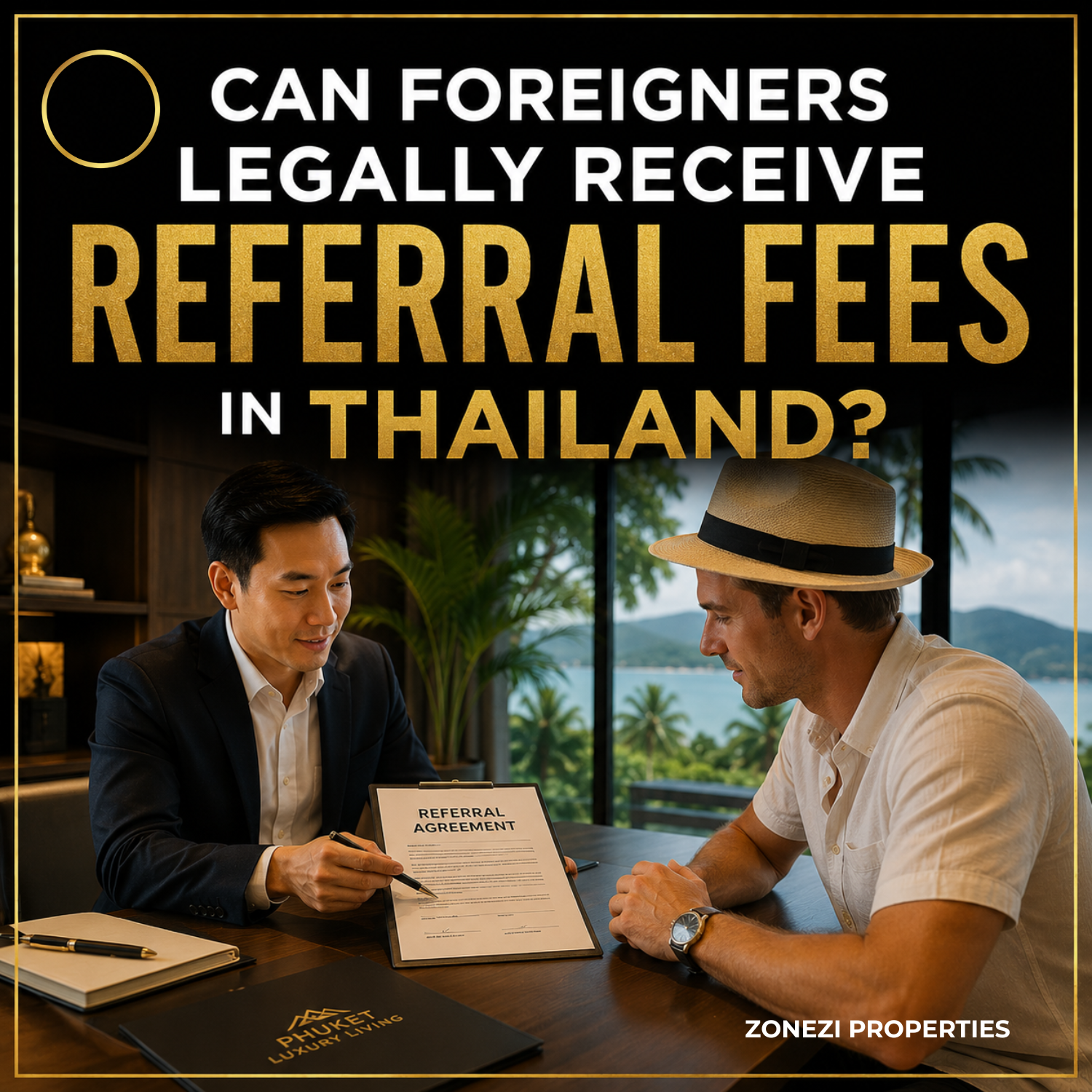
Thailand’s property market continues to attract investors, retirees, digital nomads, and lifestyle buyers from around the world. As destinations such as Phuket, Bangkok, Pattaya, and Koh Samui become increasingly popular among international buyers, a common question arises:
Can foreigners legally earn referral fees from property sales in Thailand?
The answer is not always straightforward.
While referral arrangements are common throughout the real estate industry, the legality of receiving referral fees depends on the nature of the activity, where it takes place, and how the relationship is structured.
_____________________________________________________________________________________
What Is a Referral Fee?
A referral fee is a payment made to an individual or business for introducing a potential buyer, investor, or client to a developer, property owner, or real estate agency.
In the property sector, this may involve:
- Introducing a buyer to a developer
- Connecting an investor with a property project
- Recommending a real estate agency
- Referring a client who ultimately completes a purchase
Referral fees may be structured as a fixed payment or as a percentage of the final transaction value.
_____________________________________________________________________________________
Are Referral Fees Legal in Thailand?
In general, referral fees themselves are not illegal.
Many developers, agencies, and property companies operate referral programs that reward successful introductions. Existing property owners, business partners, and members of international networks often receive referral incentives when a transaction is completed.
However, the key issue is not the payment itself but the activities undertaken to earn that payment.
_____________________________________________________________________________________
Understanding the Difference Between a Referral and Real Estate Brokerage
A simple introduction is very different from actively acting as a real estate professional.
For example, an overseas investor may introduce a friend to a Phuket developer. If the friend purchases a property and the developer later pays a referral fee, this may be viewed differently from someone who actively markets properties and earns commissions on a regular basis.
The distinction becomes more important when an individual regularly:
- Advertises properties
- Generates leads
- Conducts property viewings
- Negotiates transactions
- Represents buyers or sellers
- Promotes developments as a business activity
At that point, the activity may move beyond a simple referral relationship.
_____________________________________________________________________________________
What If You’re on a Tourist Visa?
This is where many foreigners become confused.
Receiving a referral fee is not necessarily the issue. The more important question is whether you are actively conducting business activities in Thailand.
For example, making a one-time introduction between a buyer and a developer is very different from regularly marketing properties, attending viewings, negotiating deals, or generating leads for commission.
Foreigners visiting Thailand on a tourist visa should be aware that tourist visas are intended for tourism rather than business activities. Building an ongoing property referral business while physically based in Thailand may create legal and regulatory considerations that should not be overlooked.
Many international referral partners work with Thai developers by introducing buyers from overseas and conducting their marketing activities outside Thailand. In these cases, referral arrangements are often structured differently from traditional real estate agency relationships.
Anyone planning to earn regular referral income from property transactions should seek professional legal and tax advice to ensure their activities comply with current Thai regulations.
The safest approach is to view occasional introductions and operating a property referral business as two very different situations. As the scale of activity increases, so does the importance of obtaining proper professional guidance.
_____________________________________________________________________________________
Overseas Referral Arrangements
Many successful referral partners are based outside Thailand and introduce buyers from international markets.
These arrangements often involve:
- Overseas marketing activities
- International investor networks
- Foreign companies acting as introducers
- Referral agreements with developers or agencies
Because every situation is unique, the legal and tax implications can vary significantly depending on where the activities are performed and where the income is received.
_____________________________________________________________________________________
Tax Considerations
Referral income may create tax obligations depending on your personal circumstances.
Factors that can affect taxation include:
- Country of residence
- Tax residency status
- Business structure
- Location where services are performed
- Source of income
Anyone receiving regular referral income should obtain professional tax advice to ensure compliance with all applicable regulations.
_____________________________________________________________________________________
Why Developers Offer Referral Programs
Developers increasingly recognize the value of personal recommendations.
Many international property buyers rely on trusted referrals from:
- Existing property owners
- Business associates
- Investment consultants
- Relocation specialists
- Expat communities
Referral programs help developers reach qualified buyers while rewarding individuals who make successful introductions.
In competitive markets such as Phuket’s luxury property sector, referrals have become an important source of high-quality leads.
_____________________________________________________________________________________
Best Practices for Foreign Referral Partners
Before participating in any referral arrangement, it is advisable to:
- Understand the terms of the referral agreement
- Obtain independent legal advice
- Clarify tax obligations
- Work only with reputable developers and agencies
- Maintain written records of referral arrangements
- Understand any visa or work authorization requirements that may apply
Taking professional advice before entering into long-term referral partnerships can help avoid misunderstandings and unnecessary risks.
_____________________________________________________________________________________
Final Thoughts
Thailand’s real estate market offers exciting opportunities for international investors, and referral partnerships have become a common way for buyers, developers, and professionals to connect.
While referral fees themselves are generally not unusual within the property industry, the legal and tax implications depend on the specific circumstances of each arrangement.
The distinction between making an occasional introduction and operating an ongoing referral business is important. Anyone planning to earn regular income from property referrals should obtain professional legal and tax advice before proceeding.
As Phuket and other Thai property markets continue to grow, well-structured referral partnerships are likely to remain an increasingly important part of the industry.
_____________________________________________________________________________________
Official Government Resources
Because visa, work permit, taxation, and business regulations can change over time, readers are encouraged to verify the latest requirements directly with the relevant Thai government authorities.
Immigration Information
Thai Immigration Bureau:
Thai Immigration Bureau
Official Thailand E-Visa Portal:
Thai E-Visa System
Work Permits and Employment
Ministry of Labour:
Ministry of Labour Thailand
Office of the Permanent Secretary, Ministry of Labour:
Ministry of Labour Services Portal
Foreign Investment and Business Information
Board of Investment (BOI):
Thailand Board of Investment (BOI)
BOI Guide to Working in Thailand:
BOI Work Permit Information
_____________________________________________________________________________________
Important Disclaimer
This article is intended for general informational purposes only and does not constitute legal, tax, immigration, or investment advice. Laws and regulations may change, and individual circumstances vary. Readers should seek independent legal and tax advice from qualified professionals before entering into any referral, commission, or property-related business arrangement in Thailand.
_____________________________________________________________________________________