Can Foreigners Really Get a Thai Visa by Buying Property Starting From 3 Million THB?
Thailand’s luxury real estate market is entering a new era in 2026. As international demand for long-term residency, lifestyle investment, and Southeast Asian property ownership continues to grow, Thailand has introduced new investment-linked visa pathways connected to real estate purchases.
Across Phuket, Bangkok, Pattaya, and Koh Samui, one question now dominates conversations among foreign investors:
Can foreigners really obtain a Thai visa by purchasing a condominium starting from 3 million THB?
The answer is:
Yes — but the reality is far more nuanced than many headlines suggest.
While social media and online influencers often describe this as a “Thailand Golden Visa,” the actual legal structure is more limited, more technical, and heavily regulated under Thai immigration law.
This article explains:
- the new 3 million THB investment visa pathway,
- what property ownership structures foreigners can legally use,
- what visas are available,
- and the legal realities foreign investors must understand before buying property in Thailand.
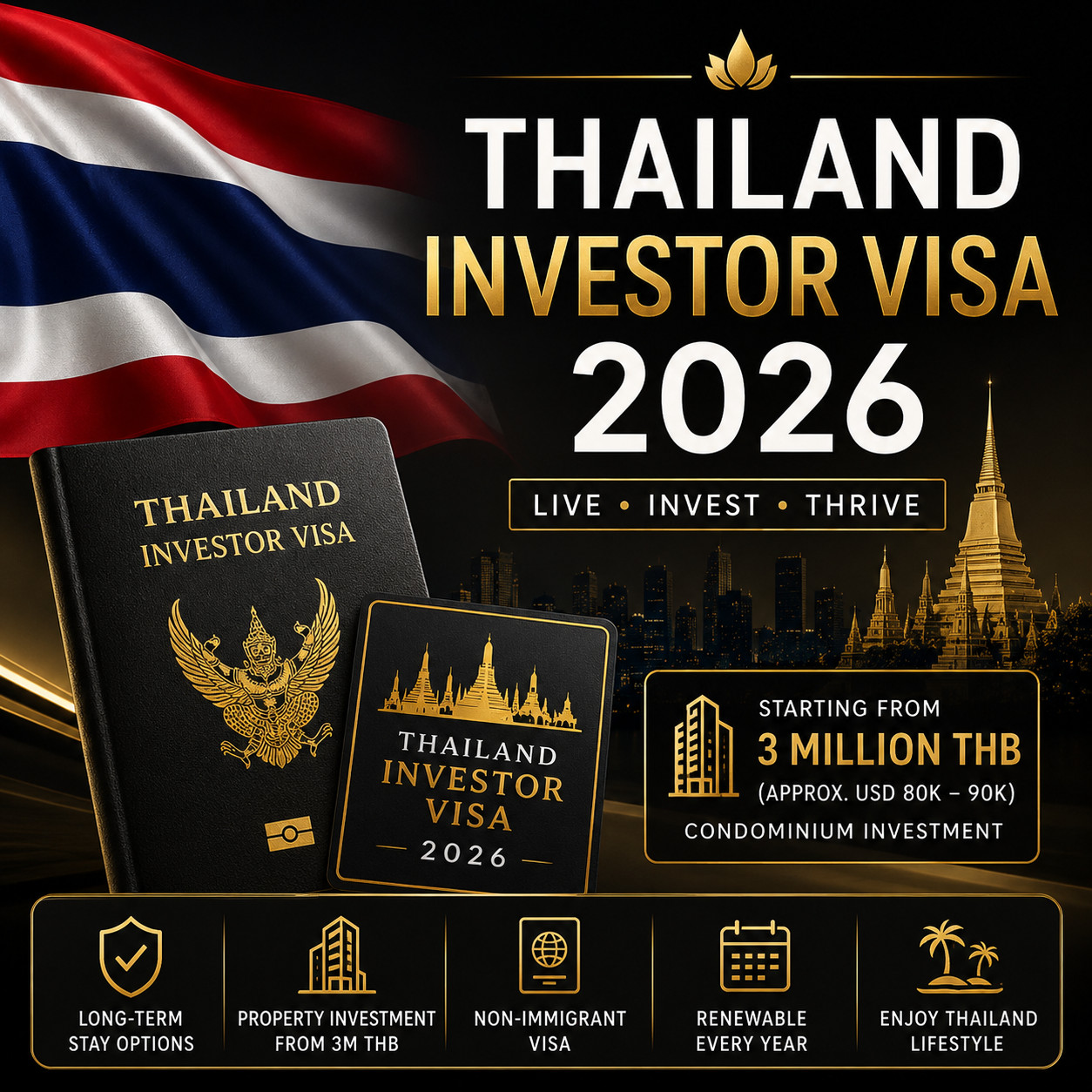
The New 3 Million THB Thailand Investment Visa
Thailand introduced new immigration pathways connected to property investment through updated Immigration Bureau Orders in late 2025 and 2026. (thai-residence.com ; thailawonline.com)
The most discussed option is now commonly referred to as:
the “3 Million THB Property Visa.”
Under this framework, foreigners may become eligible for:
- a Non-Immigrant visa,
- and renewable long-stay extensions,
through qualifying investments in Thailand.
Important Reality Check
One of the biggest misunderstandings online is the belief that:
“Buying any property automatically gives permanent residency or citizenship.”
That is false.
Thailand has not introduced:
- automatic permanent residency,
- automatic citizenship,
- or unrestricted “golden visa” rights simply by buying property. (thai-residence.com)
Instead, the current framework is generally:
a renewable long-stay visa structure tied to approved investment conditions.
What Investments Qualify?
According to multiple legal and immigration sources, the most common qualifying pathway is:
Condominium Investment Starting From 3 Million THB
To qualify, applicants generally must:
- purchase a completed condominium,
- register ownership legally,
- transfer ownership through the Land Department,
- and provide evidence of payment. (aimbangkok.com ; investeast.co.th)
Most legal sources emphasize:
- the property must usually be completed,
- ownership properly registered,
- and payments traceable through legal banking channels.
Some structures may also allow:
- registered leasehold investments,
- or qualifying long-term rental arrangements. (aimbangkok.com)
What Type of Visa Is It?
This is where many online articles become misleading.
The 3 million THB property pathway is generally connected to:
a Non-Immigrant B or investment-related long-stay structure,
not permanent residency. (thai-residence.com ; thailawonline.com)
In practice, this usually means:
- an initial visa approval,
- followed by renewable yearly stay extensions,
provided the investment conditions remain valid.
This is extremely important for investors to understand.
Does the Visa Allow Foreigners to Work?
No — not automatically.
Owning a condominium under the 3M THB pathway does not automatically provide:
- work rights,
- employment authorization,
- or unrestricted business operation rights. (reddit.com)
Foreigners who wish to:
- work,
- run businesses,
- or operate professionally in Thailand
still require: - proper visa categories,
- work permits,
- and legal authorization under Thai labour law.
This is one of the biggest misconceptions surrounding Thailand’s new investment visa discussions.
Ownership Structures Foreigners Must Understand
One of the most important legal aspects of Thai property investment is understanding:
ownership structures.
Thailand’s legal system treats different property categories differently.
1. Foreign Freehold Condominium Ownership
This is the safest and most internationally recognized ownership structure.
Under Thailand’s Condominium Act:
- foreigners may legally own condominium units directly,
- provided the condominium project remains within the foreign ownership quota. (thai-residence.com)
This is why condominiums remain the most popular option for:
- investors,
- retirees,
- digital nomads,
- and long-term foreign residents.
Especially in:
- Phuket,
- Bangkok,
- Pattaya,
- and Koh Samui.
2. Leasehold Structures
Leasehold remains extremely common in Thailand’s luxury property market.
Under this structure:
- the foreigner leases rights for a long-term period,
- while ownership structures remain compliant with Thai law.
Many luxury villas and resort residences operate under leasehold arrangements.
Some visa pathways may recognize:
- properly registered long-term leases,
- depending on investment conditions. (aimbangkok.com)
3. Investment-Based Structures
Some investors operate through:
- Thai companies,
- BOI-promoted structures,
- or approved investment entities.
However, these structures require:
- legal advice,
- proper compliance,
- and professional due diligence.
Thailand has increased scrutiny involving:
- nominee shareholders,
- foreign business structures,
- and visa misuse. (apnews.com)
Other Long-Term Visa Options in Thailand
The 3M THB property visa is not the only option available.
Thailand now offers multiple long-term residency pathways for foreign investors and residents.
Thailand Privilege Visa (Formerly Elite Visa)
One of the most popular long-term residency options.
Benefits may include:
- long-term stay privileges,
- VIP immigration services,
- airport fast-track access,
- concierge services.
This option does not require property purchase.
LTR Visa (Long-Term Resident Visa)
Thailand’s LTR program targets:
- wealthy global citizens,
- retirees,
- remote workers,
- and high-net-worth investors. (investeast.co.th)
Some pathways require:
- significant investment levels,
- overseas assets,
- or income requirements.
LTR visas may offer:
- 10-year residency structures,
- tax advantages,
- and simplified work authorization.
Destination Thailand Visa (DTV)
Thailand’s newer DTV visa targets:
- remote workers,
- digital nomads,
- freelancers,
- and long-stay travelers. (timesofindia.indiatimes.com)
The DTV has rapidly become one of Thailand’s most discussed visa programs in 2026.
Important Risks Investors Must Understand
While Thailand’s property market remains highly attractive, investors should still approach carefully.
Key risks include:
- misunderstanding visa rules,
- relying on misinformation online,
- assuming property ownership guarantees residency,
- poor legal structuring,
- and buying without professional due diligence.
Even online discussions among expats show major debate surrounding:
- renewal certainty,
- resale considerations,
- and long-term policy stability. (reddit.com)
Thailand’s immigration policies continue evolving rapidly in 2026 as authorities review:
- tourism,
- foreign investment,
- and immigration control measures. (Reuters)
Why Phuket Remains the Center of Foreign Investment
Phuket continues to dominate Thailand’s luxury property market because it combines:
- international lifestyle appeal,
- strong tourism infrastructure,
- branded residences,
- luxury villas,
- marina developments,
- and growing long-term foreign demand.
Foreign investors are increasingly attracted by:
- lifestyle migration,
- retirement opportunities,
- remote work flexibility,
- and Southeast Asia’s growing luxury market.
As a result, Phuket has become one of Asia’s strongest emerging luxury real estate destinations.
Final Perspective
Thailand’s new 3 million THB investment-linked visa pathway represents one of the country’s most significant shifts toward attracting long-term foreign capital and international residents.
But investors must understand the legal reality clearly.
Buying property in Thailand does not automatically provide:
- permanent residency,
- citizenship,
- or unrestricted work rights.
Instead, Thailand now offers a more structured framework where:
- qualifying property investment,
- legal ownership structures,
- and immigration compliance
may support renewable long-term stay opportunities.
For foreign investors, success in Thailand’s property market is no longer only about choosing the right condominium or luxury villa.
It is equally about:
- understanding visa structures,
- respecting legal ownership frameworks,
- maintaining compliance,
- and building a long-term strategy within Thailand’s evolving regulatory landscape.